
Exhibitions
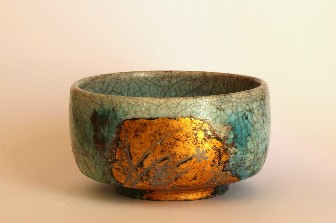
The Art of Tea
The exhibition features artworks from the museum’s collection as well as those by Mrs. Miho Kataoka Erlich.
Saturday, 22.07.17
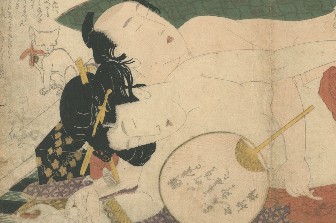
Humour with Love
Japanese Erotic Art from the Ofer Shagan Collection
New Exhibition: Humourous Erotica - 11.03.2017
The exhibition was brought to Israel with the help of The Embassy of Israel in Japan and is dedicated to to the memory of the collector’s sister, the late Oranit (Shagan) Talmor.
Sunday, 04.06.17
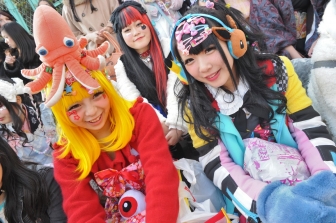
Harajuku Style (At the Horev Centre)
Japanese Street Fashion in the Photographs of Kjeld Duits.
The exhibition will be displayed at "Horev Center", Horev St. 15, Haifa, between the dates: 02.04.17-30.06.17. Free entrance!
Friday, 30.06.17
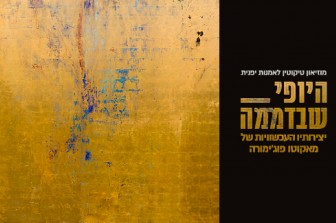
"Beauty of Silence"
Makoto Fujimura, is a talented contemporary artist. Because of his exhibitions, writings, lectures and symposia he conducts around the world, he is regarded as a cultural designer and an inspiration for both artists and art lovers. His works are a fusion of cultures, traditional Japanese art and an abstract, expressionist, contemporary and fresh artistic approach.
Sunday, 15.07.18
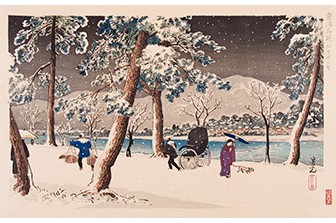
"Shin-hanga" The New Prints"
Traditional ukiyo-e prints (ukiyo-e: pictures from the Floating World) were among the most important artistic achievements of the Edo era (1603-1868), whose decline began with the death of the artist Ando Hiroshige in 1858. Two contributing factors to this change were the opening of the gates of Japan to the West in 1853 and the Meiji Restoration (1868) which led, among other things, to the discovery of new artistic works. At this time, Japan was greatly exposed to the influence of European art, although there were those who recognized the need to preserve their traditional art.
Sunday, 15.07.18
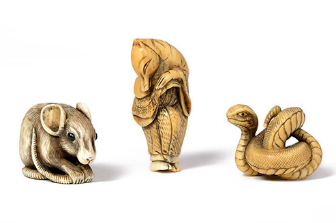
"Small IS BEAUTIFUL"
Over the centuries, the tendency evolved in Japan to value small objects over big ones and this for both practical and religious reasons. Since Japan is an island nation with limited resources and dense population, the use of large objects is not practical. In addition, the Buddhist perception of minimalism had extensive impact over a wide range of Japanese art forms.
Sunday, 15.07.18
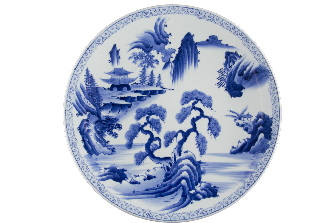
Blue and White
Japanese Porcelain Made for the Shogun and the Royal Families of Europe Donated by Maya and Guy Talmor in Memory of Their Mother, Oranit (Shagan) Talmor
Porcelain production began in Japan in the early 17th century, several hundred years after it had first appeared in China during the Tang dynasty (618–906). Although the history of pre-modern, Japanese porcelain was significantly shorter than that of its mainland counterparts, it was, nevertheless, extremely productive
Sunday, 13.01.19
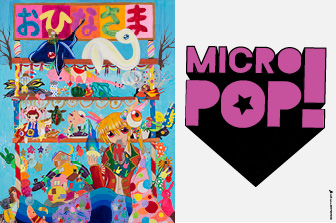
Micropop
Winter Garden: The Exploration of the Micropop Imagination in Contemporary Japanese Art
The Japan Foundation was founded in 1972 to promote mutual understanding between different countries through cultural exchanges. As part of this program, the Foundation produced the exhibition “Winter Garden: The Exploration of the Micropop Imagination in Contemporary Japanese Art,” curated by art critic Ms. Midori Matsui. The exhibition is comprised of 35 artworks including drawings, paintings and videos by 14 artists active since the late 1990s.
Saturday, 22.06.19
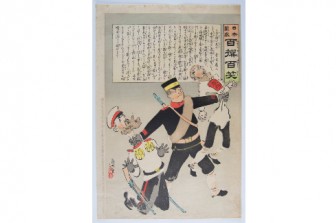
Humour and Satire in War Prints
During the Edo period, various laws and prohibitions were imposed on the Japanese public. The Tenpô Reforms of 1841 forbade luxury. In 1842, a special law was enacted dealing with woodblock prints and illustrated books. Among other things, the law forbade the publication of prints depicting Kabuki actors, courtesans, geisha and eroticism, and banned the production of colour prints with more than eight colours.
Monday, 21.10.19
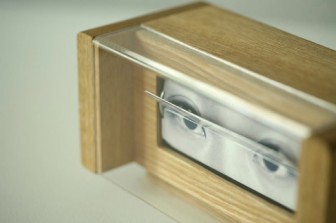
BLINKING – Yasuhiro Suzuki
Current Exhibition
Yasuhiro Suzuki | b. 1979 | is an artist designer. Suzuki does not meet the conventional definition of a designer because his creations are not limited only to aesthetic and useful products. His designs improve our quality of life, thanks to the encounter between them and the environment in which we live.
In a scientific approach interwoven with fine humor, Suzuki expresses his inner world and the way he looks at and experiences the world and the environment. Everyday experiences of joy and fear take center stage in his works. With great talent, Suzuki disassociates objects from their daily and familiar use, and gives them a new identity. Thus, cabbage leaves turn into a bowl, a gun shoots eyedrops and a tree’s leaves are replaced with eyes. Suzuki blurs the line between humans and nature – nature appears in the human body and Man is assimilated into nature.
Illustrations, seemingly simple, are an integral part of his creative process, and through them Suzuki reveals the mechanism of his thoughts. The explanations that accompany the exhibits were written by the artist. The exhibition makes accessible product, illustration, and text, the three dimensions in which the artist deals.
Saturday, 30.07.22
Please contact us and we will contact you as soon as possible